
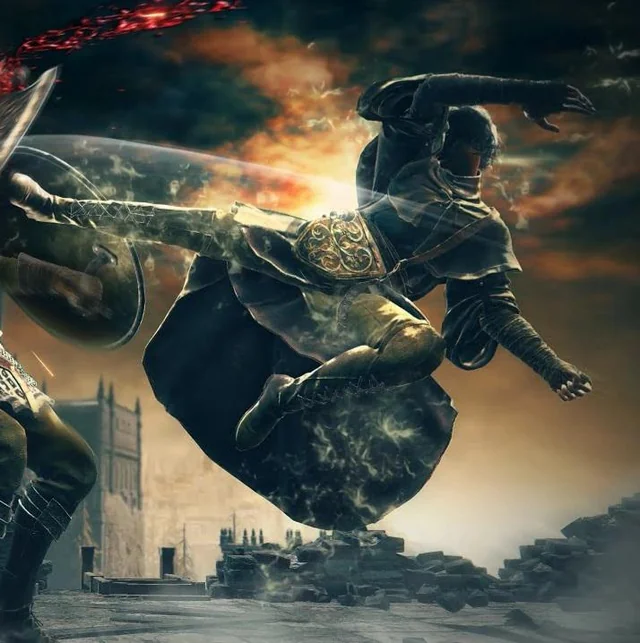
Unlike Dark Souls, where you can grind levels or change builds, Sekiro strips those options away. There are no character classes, no stat allocation, and very limited weapon choices. Instead, the game revolves around one core mechanic: Posture.
Sekiro: Shadows Die Twice stands out even among FromSoftware’s catalog because it doesn’t just refine the Dark Souls formula—it reshapes it entirely. Directed by Hidetaka Miyazaki, Sekiro trades traditional RPG systems for a more focused, skill-driven experience built around precision, timing, and mastery.

The Design Philosophy of Harsh Mechanics
While the studio became widely known for shaping the “Souls” formula through titles like Dark Souls, Sekiro departs from many of those established conventions to create a more focused, skill-driven experience. Under the direction of Hidetaka Miyazaki, the game emphasizes mastery, precision, and personal growth, making it both distinct from and deeply connected to its predecessors.
One of the defining features of Sekiro is its combat system, which replaces the stamina-based, methodical pacing of Dark Souls with a faster, more aggressive approach. Central to this system is the concept of posture, a mechanic that shifts the goal of combat away from simply reducing an enemy’s health to breaking their balance. Players must carefully time their deflections, maintain pressure, and exploit openings to destabilize opponents. This creates a rhythm-based flow to each encounter, where success depends not on numerical strength or character builds, but on the player’s ability to read and respond to enemy patterns. As a result, combat becomes an expression of skill rather than preparation, demanding full engagement and concentration.

Honorable Mentions


Despite these differences, Sekiro retains the challenging nature that defines FromSoftware’s design philosophy. However, its difficulty stems less from punishing damage or complex systems and more from its insistence on player improvement. The absence of traditional role-playing elements, such as leveling up or customizing builds, removes alternative paths to success. Instead, players must adapt, learn, and refine their techniques through repeated attempts. This creates a steep learning curve, but also ensures that every victory feels genuinely earned. Boss battles, in particular, serve as tests of mastery, requiring precise execution and a deep understanding of the game’s mechanics.


- Phase 1 (Counters and Strategies) Owl shoulder tackles, slashes, throws firecrackers, and slashes through them.
- Shadowrush/Fall Counter: He may use a similar attack to Sekiro’s, which can be deflected or punished.
- Chasing Slice: Throws a shuriken followed by a powerful lunging slash.
- Phase 2 (Owl Omen)Owl turns into his owl spirit and teleports.
- Fire Owl: Summons a flaming owl and sends it across the arena.
- Phase 1 (Genichiro, Way of Tomoe)
- Phase 2 (Isshin, Sword Phase): He utilizes a spear, sword, and pistol
- Phase 3 (Spear & Fire): The hardest phase, adding fire attacks and a huge arena-wide blaze.
- Phase 4 (Lightning Phase): Similar to phase 3, but introduces lightning.
- “Hesitation is defeat”: Stay in his face to restrict his more dangerous long-range moves.
This leads to another reason for its appeal: the rhythm and flow of combat. Many players describe Sekiro as feeling like a dance. Once the timing “clicks,” fights become smooth and almost musical, with attacks and deflections blending into a continuous sequence. This sense of flow is highly rewarding because it reflects real improvement. Players can clearly feel themselves getting better, not through numbers increasing, but through their own reactions becoming sharper and more precise.